Mangan Press/Catalogue/The Salt Line
Novella · Autumn 2026
The Salt Line
A woman returns to the estuary where her brother drowned, and finds the water has moved.
£14.00 · 94 pages · published 10 September 2026 · 978-1-9999999-4-1
Ordered direct, the book is posted within two working days from the room where it was sewn. Write to us, or find a stockist. Ordering on this demonstration site is not connected to a payment system.
Every February, for eleven years, Ruth Calloway has driven the four hours to Marle Point and walked the sea wall as far as the sluice, and every February she has turned back at the same iron post. This year the post is gone. The channel has shifted a hundred yards east, the way the men at the boatyard always said it would, and the ground where her brother went into the water is now dry, cracked, growing samphire.
The Salt Line is a novella about the small violence of a landscape that will not hold still. Ruth has built a careful life out of returning: a job she can leave at five, a house with one good chair, a habit of grief so practised it has become a kind of competence. When the estuary rearranges itself she discovers that her mourning had an address, and that the address has been struck off.
Ines Verrall writes about water the way other novelists write about money — as something that moves through a family and decides its shape. Over nine days and ninety-four pages she assembles a portrait of a marriage, a coastline and a coroner's verdict, and lets each of them cast doubt on the other two.
It is a book of tides and inventories, written in sentences pared back until what remains is load-bearing. Nothing is explained twice. By the last page the reader knows more about what happened at Marle Point than Ruth does, and Verrall has the nerve not to tell her.
The tide came in the way it always did at Marle, not as a wave but as a rumour, the mud going wet in patches a hundred yards apart, then the patches joining hands. Ruth sat on the wall with her boots hanging over and watched the ground she had stood on ten minutes earlier become somebody else's problem.
She had brought the flowers because her mother would ask. She had not decided where to put them. The iron post had been convenient in the way a headstone is convenient — it stayed still, it took the weather, it required nothing of her but arrival. Without it the whole grey mile was equally the place and equally not.
In the end she laid them on the samphire, which was the wrong ground entirely, and which by August would be under three feet of water again, and she thought: good. Let it go somewhere. Let something in this county be carried off on purpose.
- Format
- Sewn hardback, 190 × 125 mm
- Extent
- 94 pages
- Paper
- Munken Pure Rough 120 gsm, cream
- Binding
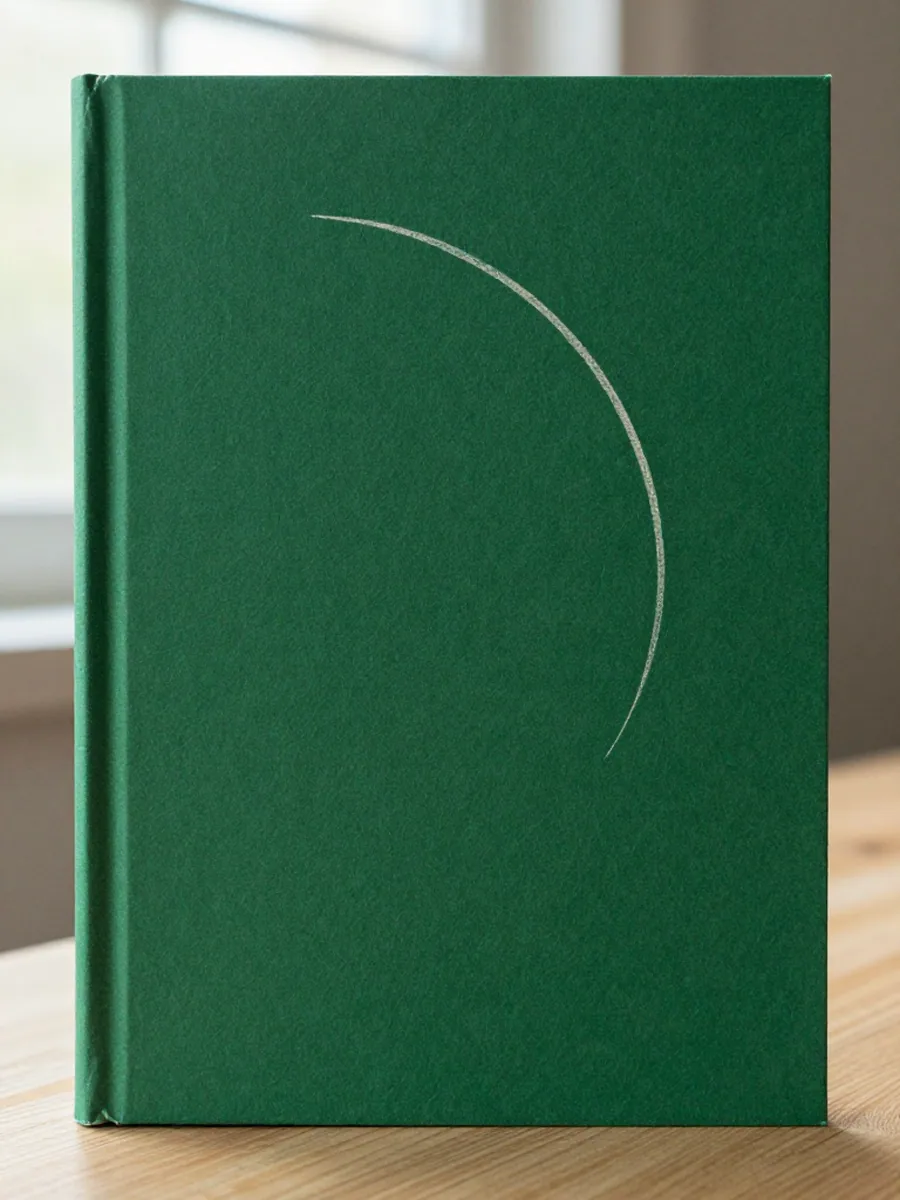
- Section-sewn, bottle-green cloth, blind-stamped spine
- Typeface
- Arno Pro, 11½ / 16 pt
- Endpapers
- Hand-marbled, slate and salt
- Edition
- 1,200 copies; 90 numbered and signed
- ISBN
- 978-1-9999999-4-1
Elsewhere on the list
The full catalogueA Short History of Weather
Nine essays on forecasting, farming, grief and the English habit of talking about the sky.
Essays · Autumn 2026 · 248 pages
£15.00October 2026978-1-9999999-5-8Bellringer
A first collection about sound, inheritance, and the churches of a childhood spent between two countries.
Poetry · Autumn 2026 · 78 pages
£12.00November 2026978-1-9999999-6-5Nightschool
Hal Everline
Eleven stories set in the lit rooms of a further education college between eight and ten at night.
Short fiction · Spring 2026 · 204 pages
£14.00March 2026978-1-9999999-1-0